
The oil and gas industry is a vital sector that serves as the backbone of modern industrial civilization and the framework of the global economy. This sector contributes a large percentage to world energy consumption and generates highly significant revenues.
Operationally, the industry is divided into three main segments:
Upstream: Covers exploration and production. Its characteristics are high risk, large capital investment, long project duration, and high technology intensity.
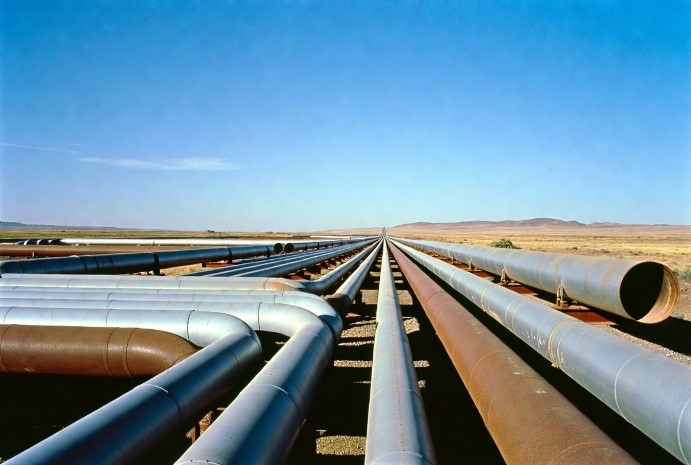
Midstream: Focuses on transportation (pipelines, trucks, shipping) and storage of crude materials to the refinery.
Downstream: Involves the refining and processing of crude oil into finished products such as gasoline, jet fuel, and asphalt.
Because of its extremely high-risk and high cost characteristics, these activities often involve multiple parties, such as the host states and oil companies both international oil companies (IOCs) and national oil companies (NOCs) that enter into agreements as legal instruments regulating the relationships between the parties.
It is common practice for oil producing countries to seek greater control over their natural resources through legislation or contractual documents. Therefore, the terms of the contract are crucial because they determine how much revenue the country receives from its natural resources.
Here are some
examples of contract types commonly used in today’s oil and gas industry
practices:
A. Concession Contract (Concession/License Agreement)
This is the oldest contract model, which evolved from one-sided contracts in the colonial era into a modern instrument. The oil company is granted exclusive rights to explore, develop, sell, and export oil from a specific area for a fixed period of time.
B. Production Sharing Agreement (PSA/PSC)
In this model, the state retains ownership of the resources, while the company acts as the operator and manages operations under a profit-sharing system.
C. Joint Venture (JV)
A commercial arrangement between two or more parties to pursue a joint business by sharing risks and rewards.
In Indonesia,
the regulation of the oil and gas (Migas) industry falls under the Ministry of
Energy and Mineral Resources (ESDM), where the Special Task Force for Upstream
Oil and Gas Business Activities (SKK Migas) which is specifically responsible
for managing upstream oil and gas business activities based on the Cooperation
Contract (KKS), and the Downstream Oil and Gas Regulatory Agency (BPH Migas) which
is tasked with supervising the supply and distribution of Fuel Oil (BBM) as
well as the transportation of natural gas through pipelines (downstream
sector).